How to Evaluate Property Value Before Buying
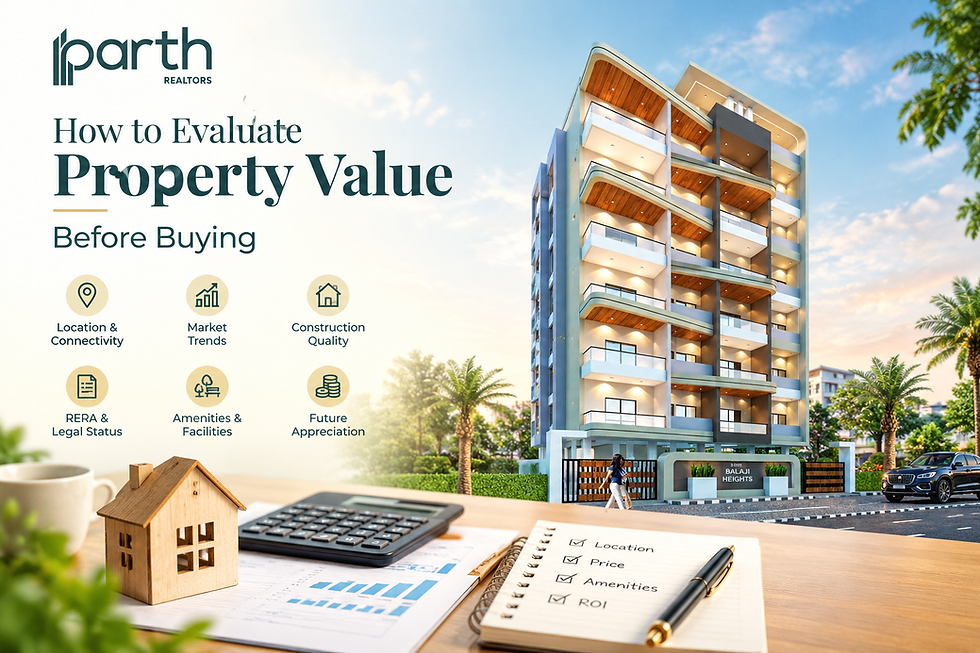
Buying a property is one of the biggest financial decisions a person can make. Whether you are purchasing a home for your family or looking at real estate as an investment, understanding the true value of a property is essential.
A property’s price is influenced by much more than its size and appearance. Location, construction quality, amenities, connectivity, future development and market demand all play an important role.
Here are the key factors you should consider when evaluating property value.
1. Location Matters Most
The location of a property has a major impact on its current and future value.
Look for properties that offer convenient access to:
Schools and colleges
Hospitals and healthcare facilities
Shopping centres and markets
Offices and commercial areas
Public transportation
Major roads and highways
Banks and essential services
A well-connected location generally attracts stronger demand and can offer better long-term appreciation potential.
2. Compare Similar Properties
One of the simplest ways to understand whether a property is fairly priced is to compare it with similar properties in the same area.
Consider properties with comparable:
Carpet area
Configuration, such as 1BHK, 2BHK or 3BHK
Floor level
Age of construction
Amenities
Location and accessibility
Construction quality
Comparing multiple properties gives you a better understanding of the prevailing market price instead of relying on a single quotation.
3. Check the Carpet Area
Don't evaluate a property based only on the total or super built-up area.
Carpet area tells you more about the actual usable space inside the home. When comparing two properties, look at the price per square foot based on comparable area measurements.
A slightly higher-priced home may provide better value if it offers significantly more usable space and a better layout.
4. Assess Construction Quality
A property's long-term value depends heavily on the quality of its construction.
Pay attention to:
Quality of building materials
Structural design
Flooring and wall finishes
Doors and windows
Plumbing and electrical work
Waterproofing
Ventilation and natural light
Overall maintenance standards
Good construction can provide better durability, comfort and resale potential.
5. Consider Amenities and Facilities
Modern homebuyers often look beyond the apartment itself.
Amenities such as parking, security, landscaped areas, lifts, recreational spaces and children's play areas can add to the overall appeal of a project.
However, don't choose a property simply because it has many amenities. Consider whether those facilities are genuinely useful to your family and whether they justify the additional cost.
6. Look at Connectivity and Infrastructure
Current connectivity is important, but future infrastructure can also influence property appreciation.
Upcoming roads, transportation links, commercial developments, educational institutions and other infrastructure projects may increase demand in an area.
Before making a decision, research planned developments and verify important claims through reliable sources.
7. Understand the Total Cost
The advertised property price is not always the final amount you will spend.
Your budget should account for applicable costs such as:
Stamp duty
Registration charges
Taxes, where applicable
Parking charges
Maintenance or society-related charges
Utility connections
Legal and documentation expenses
Interior and furnishing costs
Calculating the complete acquisition cost helps you make a more realistic comparison between properties.
8. Check Legal and Property Documents
A property can appear attractive financially, but documentation is equally important.
Before purchasing, verify relevant documents and approvals, including ownership/title documents, sanctioned plans, applicable approvals and registration details.
For a significant purchase, consider taking advice from a qualified property lawyer or other appropriate professional.
9. Think About Future Value
A good property should not only meet your needs today—it should also make sense for the future.
Ask yourself:
Will this location remain desirable?Is the neighbourhood developing?Will the property meet my family's future needs?Is there consistent demand for similar properties?
Thinking beyond the purchase price can help you identify properties with stronger long-term potential.
10. Evaluate the Developer's Reputation
The reputation and track record of the developer can also influence your decision.
Look at previous projects, construction quality, delivery history, customer experience and transparency in documentation.
A trustworthy developer can provide greater confidence throughout the buying process.
Final Thoughts
Evaluating property value isn't simply about finding the lowest price. True value comes from the right combination of location, usable space, construction quality, amenities, connectivity, documentation and long-term potential.
Take your time, compare options carefully and understand the complete cost before making a decision.
At Parth Realtors, we believe that finding the right home starts with making an informed choice. Your dream home should offer not just a place to live, but comfort, convenience and lasting value.
Parth Realtors — Helping You Find a Home That Truly Adds Value to Your Life.
Property Value Before Buying
How to Evaluate Property Value
Property Valuation in Nagpur
Real Estate Investment in Nagpur
Property Buying Guide
Parth Realtors
Property Investment Guide
Best Property Investment in Nagpur
Factors Affecting Property Value
How to Check Property Value
Real Estate Investment Tips
Property Location and Connectivity
Construction Quality Assessment
Property Appreciation Potential
RERA Approved Property
Residential Property in Nagpur
2BHK Flats in Nagpur
Property Price Evaluation


